

Gayaza High School, St. Lawrence London College Win 2026 National Science Olympiad
Team Helix takes national crown as students from across Uganda face off in research, scientific argument and peer review at the 09th Uganda National Science Olympiad
Team Helix takes the title
Gayaza High School has been crowned champion of the 09th Uganda National Science Olympiad after its Team Helix emerged victorious at the national tournament held on August 15, 2026, at Galaxy International School Uganda.
Team Helix finished ahead of Team Lumina of Mengo Senior School, which took second place, while Team Alchemists of King’s College Budo completed the national podium in third place.

The tournament’s top three teams
Team Helix
Gayaza High SchoolNational Champions
Team Lumina
Mengo Senior SchoolSecond place
Team Alchemists
King’s College BudoThird place
Excellence across an entire school delegation
While Gayaza High School took home the tournament’s principal championship through Team Helix, organisers also assessed the broader performance of schools with multiple teams in the competition. For this classification, scores attained by all participating teams from each school were averaged to determine which institutions demonstrated the strongest performance across their entire delegation.
The two rankings recognise different forms of excellence. The National Championship identifies the strongest individual team at the tournament, while the overall school ranking measures the consistency of a school’s participating teams across the competition.
Consistency across participating teams
London College of St. Lawrence
1st overallTop-performing school
Ntare School
2nd overallTrinity College Nabbingo
3rd overall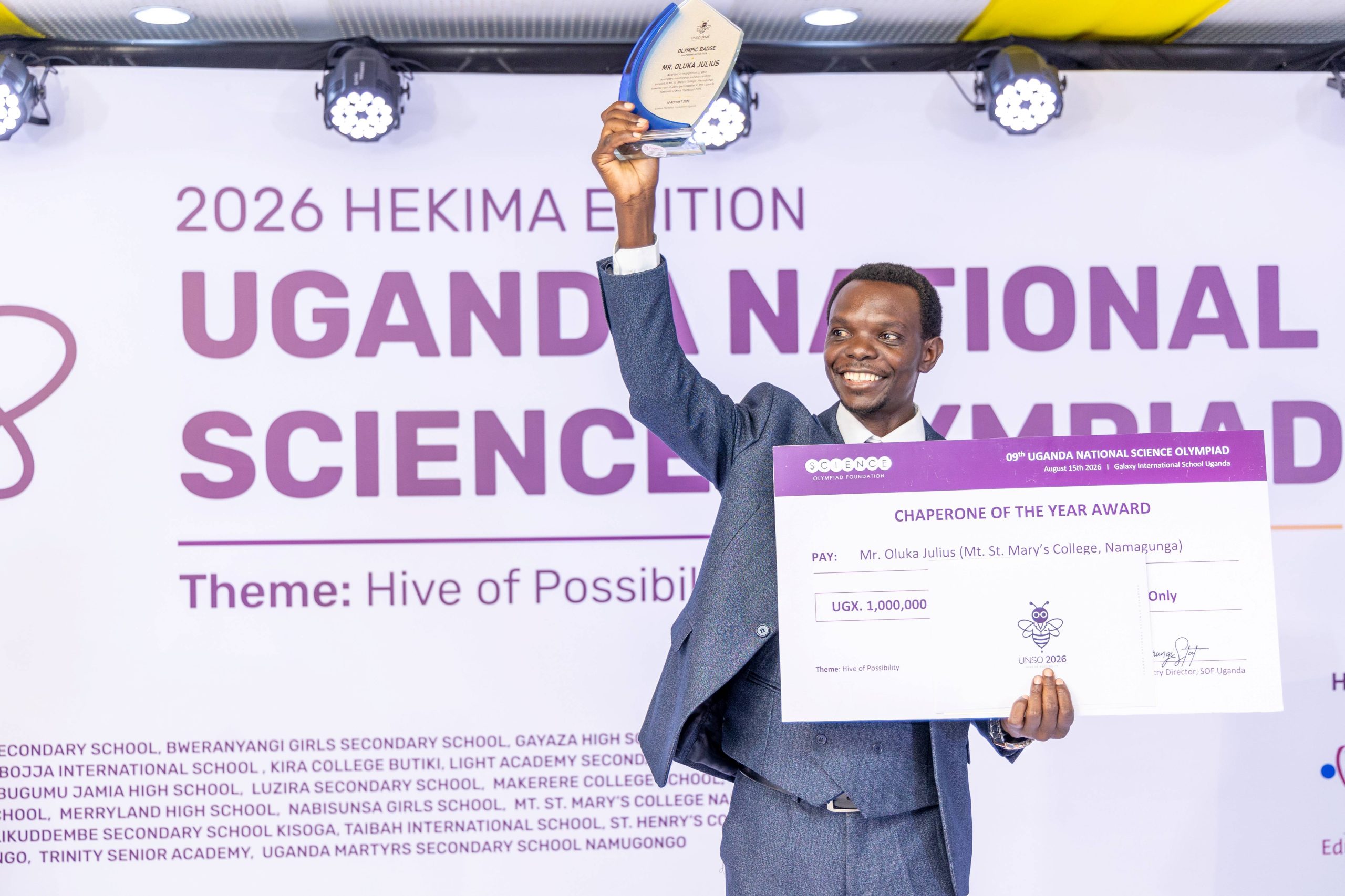
Oluka Julius - Chaperone of the Year
Mr. Oluka Julius of Mt. St. Mary’s College Namagunga was named Chaperone of the Year, in recognition of his outstanding contribution to the advancement of the Science Olympiad programme at his school.
Organisers say the award is intended to draw attention to an often less-visible part of academic competitions: the teachers and school coordinators who identify students, organise teams, support months of preparation and create an environment in which young scientists can thrive.
A contest built around scientific argument
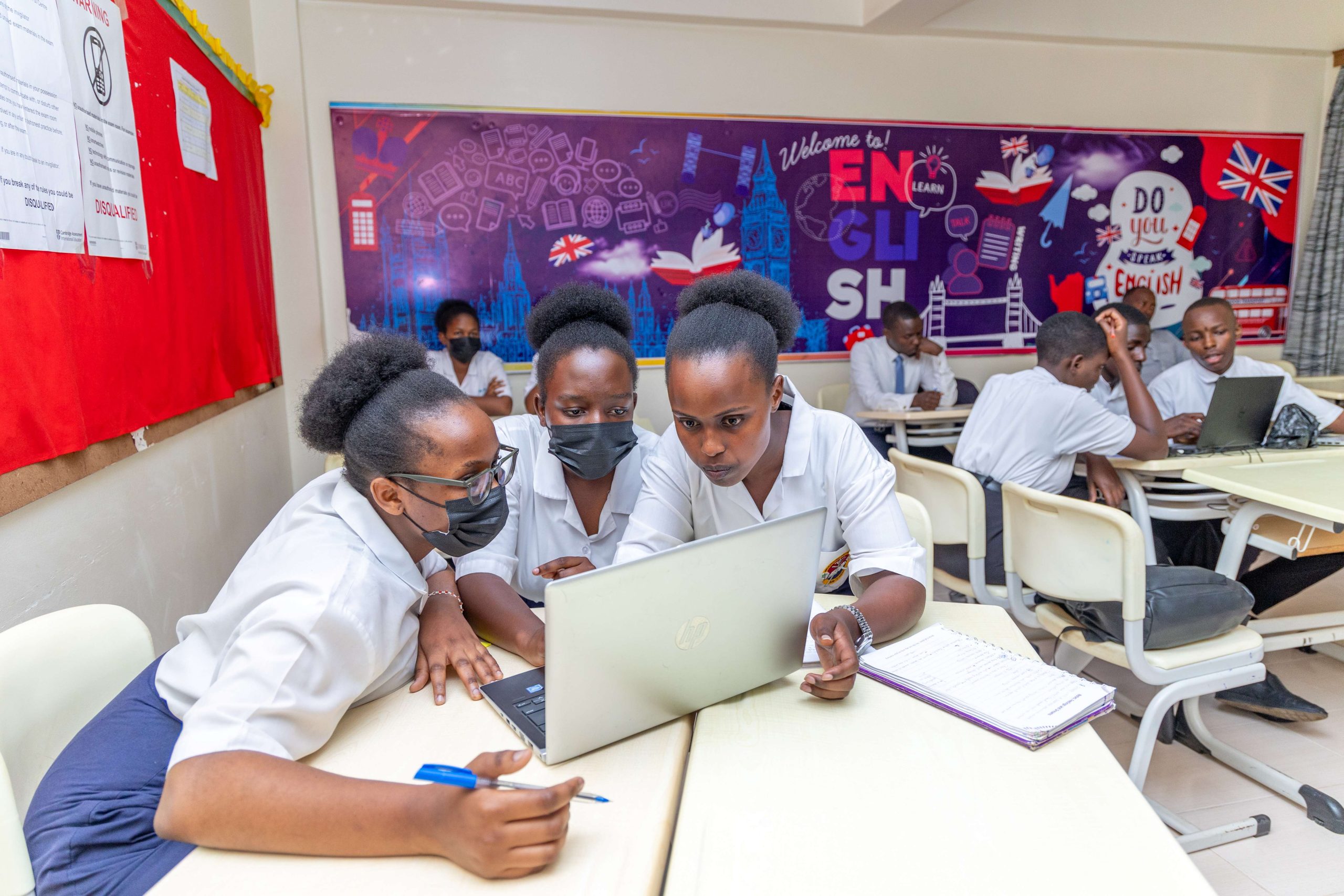
But behind the medals and trophies was a competition unlike the conventional image of a school science contest. Instead of sitting for a traditional examination or answering rapid-fire science questions, participating students spent the day presenting research, defending scientific ideas, challenging the work of their peers and responding to criticism before panels of jurors.
The tournament was conducted using a format known as Science Fights, a model designed to test not only what students know, but how well they can investigate, communicate, question and defend science. In each Science Fight, teams assume three distinct roles: Reporter, Opponent and Reviewer.
The teams rotate through the different roles during the tournament. It means that success requires considerably more than memorising scientific facts. Students must understand their own research deeply enough to defend it, understand another team’s work quickly enough to challenge it, and possess the judgement to critically evaluate an entire scientific discussion.
For organisers, this is precisely what gives the National Science Olympiad its distinctive place in science education.
Three responsibilities. One scientific conversation.
Reporter
Present and defend the team’s investigationOpponent
Challenge another team’s scientific workReviewer
Critically evaluate the entire scientific discussionWhy the format mattersMaasa Kevin, Administrator - Science Olympiad Foundation Uganda“The National Science Olympiad has increasingly positioned itself around an idea that is sometimes missing from traditional classroom science: that scientific knowledge advances through questioning.We want young people to experience science as something they participate in, not simply something they read in a textbook,” said Maasa Kevin, Administrator of the Science Olympiad Foundation Uganda.
“During a Science Fight, Students are rewarded for asking whether conclusions follow from evidence, whether experiments adequately control variables, whether alternative explanations have been considered and whether another team can defend the choices it made during its investigation. That makes the Science Fight simultaneously competitive and collaborative. While schools are competing for national honours, every presentation gives the students in the room another piece of research to examine and another scientific argument to think about.” he added
Nationals begins months before Nationals
For many students, participation at Nationals begins long before they enter the competition room. Teams have to investigate research problems, conduct experiments, analyse results, prepare presentations and anticipate the scientific questions their opponents may raise.
The culmination is the national tournament, where that preparation is placed under scrutiny.
According to Maasa, this makes the Olympiad as much a learning platform as it is a competition.
The larger victoryMaasa Kevin“Of course there must be winners. Competition creates ambition and gives students something to strive for,” he said.
“But the larger victory is when a young person leaves Nationals more curious, more confident in discussing science and more willing to question evidence than when they arrived. That is the kind of scientific culture we want to build.”