

Can your research survive scrutiny?
Present your Team’s original solution, evidence and conclusions - then defend them in discussion.
Start from zero. Leave knowing how to challenge, report, oppose, review, discuss, build slides and think like a scientist inside a Science Fight.
The Academy will keep the rules and coaching the same, but all worked examples, model illustrations, Opposition prompts, Review examples and problem-specific simulator questions will follow the Problem you choose.
A Science Fight is a graded scientific conversation in which teams rotate through three responsibilities: presenting research, challenging research, and judging the debate.
Present your Team’s original solution, evidence and conclusions - then defend them in discussion.
Analyse the Report objectively, identify the important weaknesses and strengths, then lead the scientific discussion.
Assess both performances, identify what was resolved and deliver an impartial third-party conclusion.
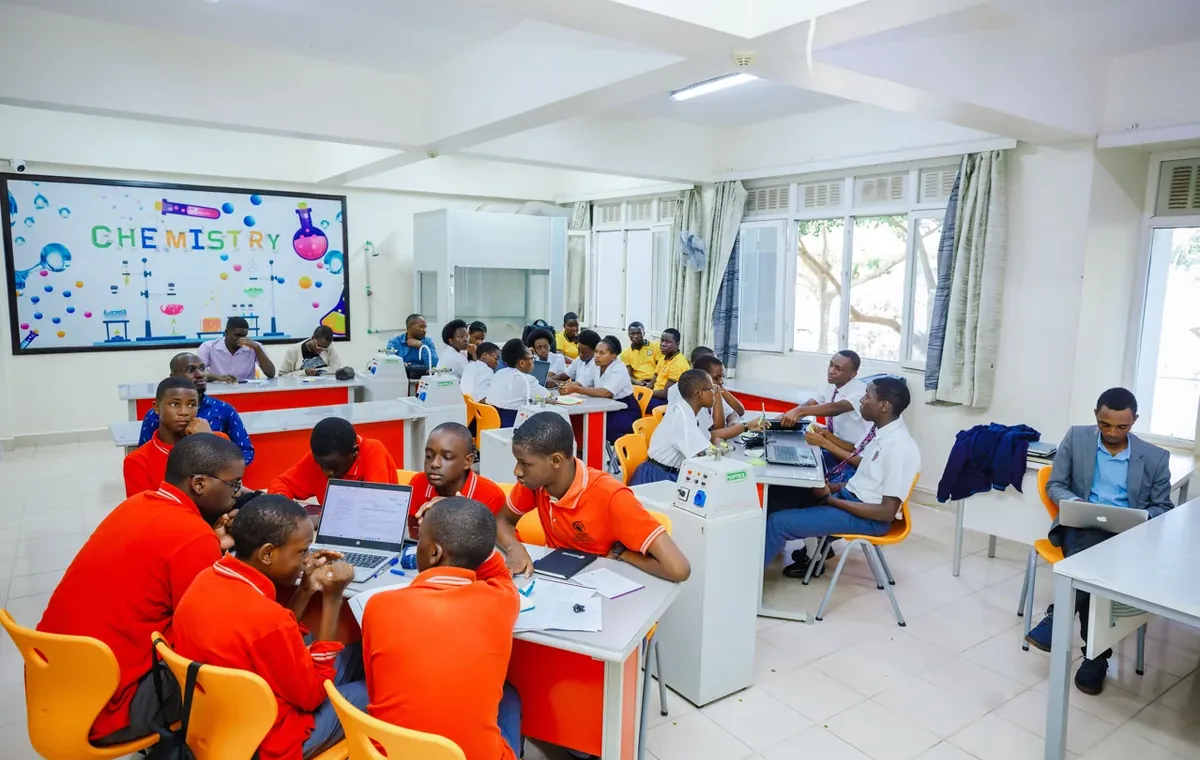
Three teams share the room as Reporter, Opponent and Reviewer. At the National Tournament, every team must be ready to perform all three roles across the Science Fights.
One Stage has a choreography. Learn the choreography and the room stops feeling mysterious.
The Opponent names a Problem. The Reporter accepts it or rejects it so another challenge can be made.
The fixed sequence is 1 + 2 + 8 + 2 + 2 + 5 + 2 + 2 + 2 + 3 minutes. Juror questions and scoring follow the Reviewer speech.
You now know what a Science Fight is and how a Stage moves. Before the Academy teaches challenge strategy, reporting, opposition, review and simulation, choose one 2026 Problem as your worked-example lens.
The same coaching principles apply to every Problem. The examples below are one defensible way to reason through the science - compare them critically with what your own team investigated.
The Opponent names a Problem. The Reporter must decide whether to accept or reject it before the Reporter preparation period begins.
Choose a 2026 Problem to challenge.
Your job is not to choose the scariest title. Choose a Problem whose science you are prepared to analyse carefully.
The official UNSO format allows the Reporter to accept or reject a challenge. Treat rejection as a deliberate decision, not a panic response. If you reject, the Opponent must move to another Problem; your team should still prepare broadly enough that challenge strategy never replaces scientific preparation.
Assume the room knows nothing. Your job is to teach the phenomenon, build the model, show the experiment, test the prediction and land a defensible conclusion.
Here is what we discovered.
Challenge it.
Choose your training lens to load the worked example.
Every worked example below will follow this Problem. These illustrations teach reasoning - they are not model answers.Scientific framing is the act of turning a broad Problem into a precise question that can actually be tested. It decides what relationship you care about, which variables matter, what you will measure and what you are deliberately leaving outside the study.
Interesting, but not yet testable enough.
Now the independent variable, outcomes and scope are visible.
Strong Reporter presentations make these three layers distinct - and place the theoretical model before the experimental model.
General ideas about the phenomenon, independent of your particular apparatus.
Choose a Problem to load the theory illustration.A simplified causal or mathematical representation of the exact situation you are investigating. It states assumptions and makes testable predictions.
Choose a Problem to load the theoretical model.Your controlled simplification of the real-world Problem, including what you vary, measure and hold fixed.
Choose a Problem to load the experimental model.If the audience sees apparatus before the model, they know what you did but not what the experiment was designed to test. The theoretical model gives the experimental model a scientific purpose.
Do not hide messy measurements. Explain what they mean for the confidence of your result.
Choose a Problem to load a random-error example.
Choose a Problem to load a systematic-error example.
Choose a Problem to load an uncertainty example.
Choose a Problem to load a limitation example.
Practise the Reporter story under the UNSO presentation limit. The clock nudges you to make room for the theoretical model before rushing into apparatus and results.
Your job is to test the Report that actually happened - especially the bridge from theoretical model to experimental model to evidence.
I listened carefully.
Here is what survives - and what may not.
Check assumptions, variables, physical logic and whether the model can actually be tested.
Check controls, measurement, calibration, repeats and whether important variables changed together.
Compare prediction with evidence and uncertainty. This is often where the most important Opposition lives.
Was the research question actually testable?
Do its assumptions and predictions make scientific sense?
Could the setup genuinely test those predictions?
Are the data stronger than the uncertainty?
Does the conclusion actually follow?
Choose one.
You have two minutes. The Opponent leads a focused scientific conversation. The goal is not to "win" - it is to clarify disagreement, test assumptions and see what the evidence can really support.
Choose a training Problem to load the discussion challenge.
When a criticism is valid, acknowledge it precisely, narrow the claim and defend what your evidence genuinely supports.
The Reviewer is not a second Opponent. The Reviewer interprets what the Reporter and Opponent actually achieved.
I watched both sides.
Here is what the debate established.
What was established?
What was tested?
What changed?
What remains true?
The ballot rewards science first, but Nationals can be separated by tenths after juror scores are combined. Do not throw away smaller criteria simply because Alpha carries the widest range.
Each role starts from a base score. Jurors then add or subtract points through four scales: Alpha, Beta, Gamma and Delta. Final score = base score + α + β + γ + δ.
When several juror ballots are combined, final averages can become extremely tight. A team can dominate Scientific Essence and still leak enough points through role execution, structure or minor aspects to lose the overall fight. Protect every mark.
Choose a role, move Alpha-Beta-Gamma-Delta and see how the ballot changes.
Base score: 15
Promising. Now make the model, evidence and defence sharper.
Reporter starts at 15, Opponent at 10 and Reviewer at 5. Alpha, Beta, Gamma and Delta then adjust the score within role-specific ranges.
Tap a mistake. Learn the fix. Avoid public heartbreak. 😂
Choose your role and make decisions under a simulated Stage. Your choices build a Fight Readiness score.
The goal of a Science Fight is not to look invincible. It is to make research better through explanation, criticism, defence and judgement.